How intentional design drives experience, differentiation and performance
There’s a pattern I see across glamping and vacation resort sites worldwide.
Beautiful land. Strong intention. Real investment. And then… interiors and exteriors that feel like they could exist anywhere. Sourced quickly. Purchased all at once. Pulled from the same references everyone else is using.
The result? Spaces that are finished—but forgettable. A crisis of sameness. And in a category built on experience, forgettable doesn’t perform.
“If your interiors could exist anywhere, they won’t stand out anywhere.”
The Real Issue
This isn’t about budget. It’s about approach. Most projects follow the same pattern:
- Build first
- Design comes last
- Procure everything at once
It feels efficient. It checks the box. But it skips the most important step—intention. Because when design is treated as a final layer instead of a strategic one, the outcome is predictable:
- Lower perceived value
- Price-driven bookings
- Weak guest memory
- Minimal differentiation
The space works. But it doesn’t lead.
The Shift
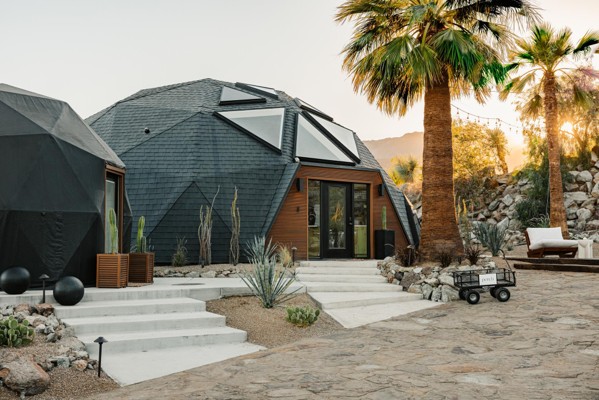
The most successful properties don’t design rooms. They design destinations. That shift changes everything.
A destination has a point of view. It creates a specific feeling. It gives people a reason to choose it—and remember it.
At a high level, every strong space is grounded in four things:
- Identity — What is this place, really?
- Emotion — How should it feel?
- Meaning — Why would someone choose it?
- Expression — How it all shows up physically
“Great interiors aren’t assembled. They’re translated.”
Before you purchase a single item, pause. Ask yourself:
- Who is this space for—specifically?
- What are they coming here to feel?
- What would make this experience different from anywhere else?
If you can’t answer these clearly, buying furniture will only create noise—not clarity.
Define Before You Design
Don’t start with Pinterest. Start with a decision.
Define your guest in one sentence:
“This is for ______ who wants ______.”
If you can’t fill that in, you’re not ready to design.
Design the Experience — Not Just the Look
Think in sequences, not snapshots.
Arrival → first impression → moments of pause → lasting memory
Guests don’t remember materials. They remember how the space made them feel.
Anticipatory Design
The most thoughtful spaces don’t just respond to guests—they anticipate them. Before a need is spoken, it’s already been considered.
A place to set a bag exactly where it’s needed. Lighting that shifts with the time of day. A chair positioned not just for function, but for a quiet pause.
These aren’t added features. They’re signals—that the experience has been thoughtfully designed with intention.
Curate, Don’t Furnish
The instinct is to furnish—to complete the space, check the box, move on.
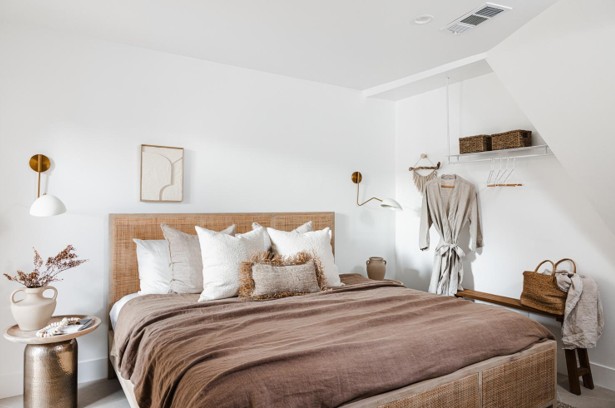
But furnishing fills a room. Curation shapes how it is experienced. Curating a space is about making deliberate decisions that guide how someone moves through it, pauses within it and ultimately remembers it.
It’s what turns a collection of furnishings into something cohesive, intentional and worth choosing. When everything is sourced the same way, with the same intent, the result is predictable. Flat. Uniform. Forgettable.
Thoughtful spaces are shaped, not filled. With clarity on the experience you’re creating, decisions become easier—not harder. You’re not reacting. You’re selecting, with intention.
Each element plays a role:
- Foundational pieces that anchor the space
- Contrasting elements that create interest
- Details that add character and depth
- Elements that evoke an emotional response
This is what gives a space dimension—and keeps it from feeling like it came from a single source, avoiding what I call the “catalog effect,” where everything is cohesive, but nothing is distinctive.
Sometimes the most powerful growth strategies are not new. They are the ones you finally decide to take seriously.
Design for Moments
Guests don’t remember rooms. They remember moments.
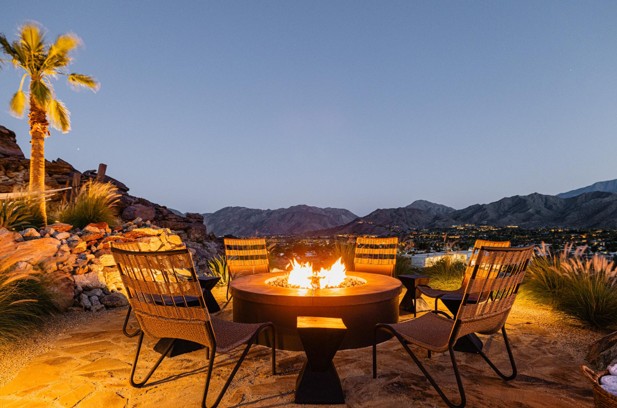
A firepit at dusk with local artisans blankets at their fingertips.
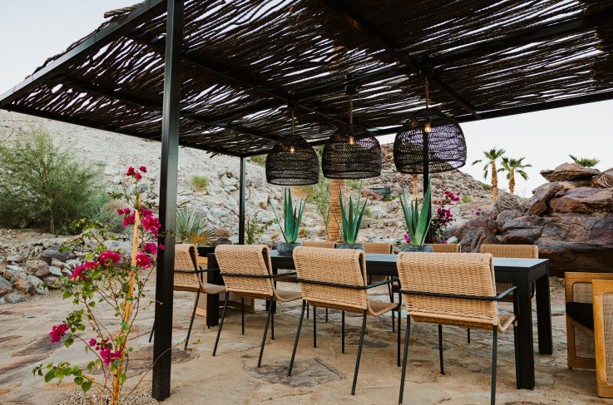
An outdoor shower, placed just off the path—where light filters through and water hits stone—becomes a reset, not a rinse.
A quiet chair placed perfectly encouraging a pause in their stay. Nothing is explained. Everything is understood.
“Moments are what guests carry with them—and why they return.”
Where Design Meets Performance
Great design doesn’t just look good—it performs. It considers not only how a space is experienced, but how it’s operated, maintained, and sustained over time. That means:
- Materials that last—and age well in their environment
- Spaces that function intuitively for both guest and operator
- Details that align with how people actually live, move and use the space
- Texture and materiality that create a sensory connection
The balance matters. When design and operations are considered together, the experience feels effortless—for the guest and the team behind it. Because beauty without performance doesn’t scale. And performance without intention doesn’t differentiate.
Distinction Drives Demand
A property can be well-designed—and still feel generic. Neutral palette. Matching furniture. Safe choices. Or…
It can be rooted in identity. Connected to place. Layered with intention. That’s when it becomes recognizable. And recognition is what drives demand:
- Consistent, repeat bookings
- Higher rates
- Stronger guest recall
The balance matters. When design and operations are considered together, the experience feels effortless—for the guest and the team behind it. Because beauty without performance doesn’t scale. And performance without intention doesn’t differentiate.
Design Isn’t Decoration—It’s Strategy
In eco hospitality, guests aren’t just choosing a place to stay. They’re choosing:
- A feeling
- A perspective
- A story they want to step into
Your interiors are what make that real. They influence:
- Booking decisions
- Nightly rate
- Shareability
- Longevity of the asset
“In a world of sameness, design becomes your only defensible advantage.”
The goal isn’t to make a space look complete. The goal is to make it unforgettable. Because the most successful destinations aren’t the most elaborate. They’re the ones that people choose—and remember.